5 Things to Change in AI Writing
Last month, I talked about about where AI writing can be helpful and where your own voice matters more. That big overview is helpful for determining how we can best use AI to support the writing that we do at work.
AI writing can *look* clear, complete, and competent. But the reality is that AI writing feels “weird” or “off” to many people if it doesn’t have a relatable point of view.
Humans use a lot of things to determine whether people are trustworthy. In person, we evaluate in a glance someone’s
Clothing
Cleanliness
Smile
Handshake
Eye contact
Posture
Even where they are standing!
When we are writing, none of those techniques for evaluating a person work. Instead, we rely on their language. At a glance, we are looking at their writing and evaluating whether we can trust them. We assess someone’s
Vocabulary
Sentence structure
Structure/formatting
Correctness
Clarity
And now, we are trying to see if they are spam, or AI, or a real human that we might want to engage with!
So, if you are using AI to help you write, you’ll want to think about the best ways to use it–which is typically not in having it write *for* you. Instead, you’ll want to give it a solid draft, evaluate any revisions that it suggests with a critical eye–don’t let it change you. And most importantly, make sure that everything you write still sounds like you!
Here are the main tips for reviewing AI writing to make sure you are building trust with the people who are reading your writing!
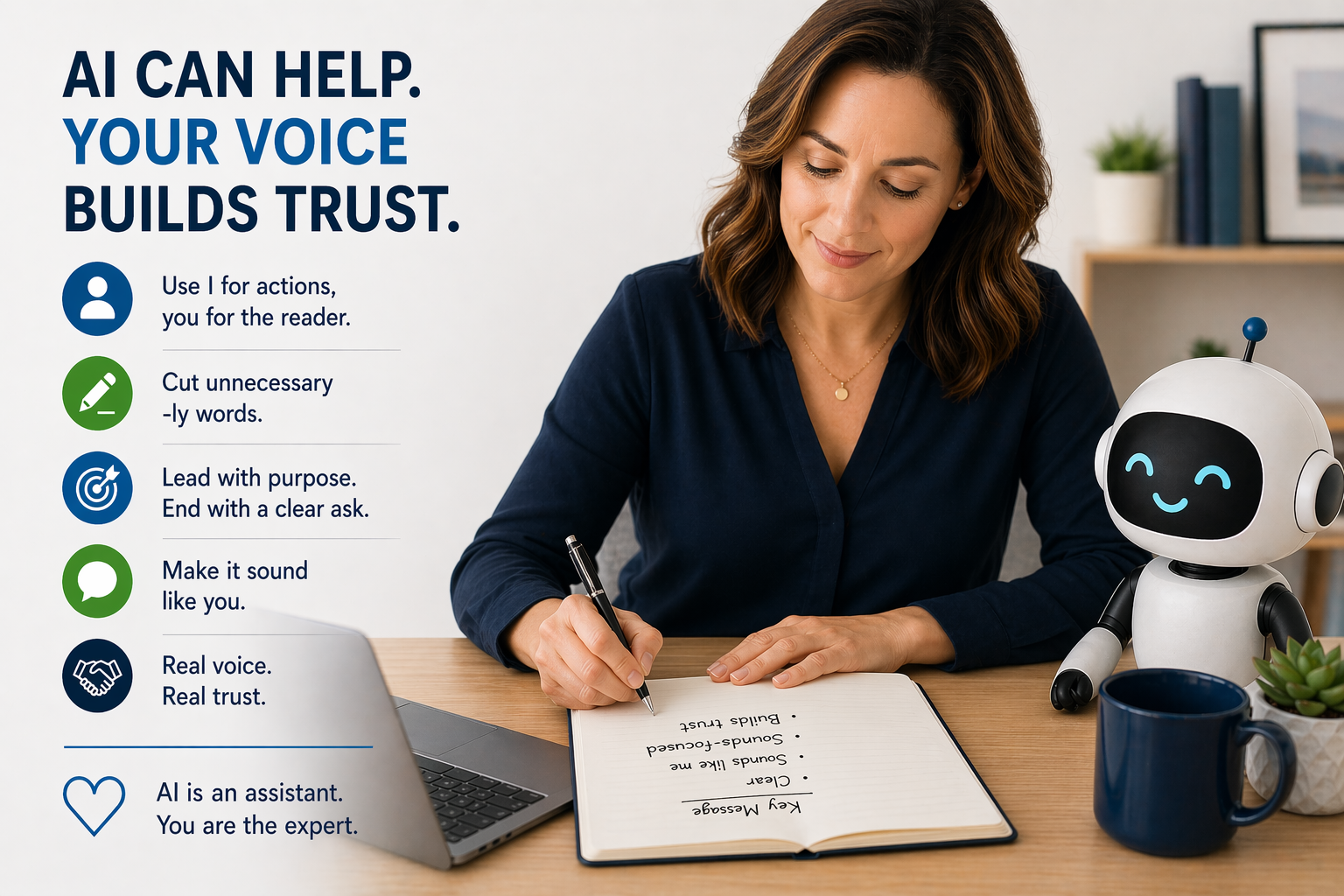
1. The word “I” (or the collective “we”)
Remember the guideline to avoid using “I” for thoughts and feelings (I think, I know, I believe, I wonder, I hope) but keep “I” for any actions you have taken or will take
2. Words ending in -ly
Many words ending with -ly create judgment or tell the reader how to feel. Business writing should be mostly neutral (as much as possible), so remove unnecessary -ly words where you can
3. The first sentence(s) of a message
This is your most valuable real estate. Make sure it is purpose-driven and audience-focused, while also sounding like *you*!
4. The last sentence(s) of a message
This is where you make your ask clear. Make the ask clear: use a question mark or this template: Please do [x] by [date] so that _____________. People are more likely to follow through when they understand exactly what you need, what your timeframe is, and what the outcome of their action will be. Make sure those are clear and easy to see in your message.
5. Your unique voice
The language you use is as unique to you as your fingerprint. People want to work with other people we know, like, and trust. Make sure every word in your message sounds like something *you* would say!
Based on how people read and how they trust, these are the most important things to look at when you are using AI to help you write!
Make sure that the you are using “I” less than you would when speaking so that the focus tends to be on the “you”--the reader–in your message. Think of I/you as eye contact. If you are using a lot of “I”, you are *not* looking at the person. If you are using “you”, you are making eye contact. Words that end in -ly tend to tell the reader how to feel about your content. Taking those out of your writing helps the reader feel like they are receiving objective information that they can make up their own mind about. And that builds trust.
The frame of your message–the first and last sentences–are your most valuable real estate since those are the ones your reader is most likely to read. Make them work for you!
And make sure that every word, sentence, and idea sounds like something you would actually say so that the reader feels like they are getting a message from you and not from just anyone. We trust individuals. We don’t trust just anyone. And that’s for good reason.