We're talking about "you" and how to not make it weird
Last month I wrote about how to use “I” effectively, so maybe you’re wondering “Hmmm, if there are rules about “I”, are there rules about “you”, too?
The answer is…sort of.
The main goal with “you” is to use it more. Use it at least as much as “I”. But try to use it *more* than “I”.
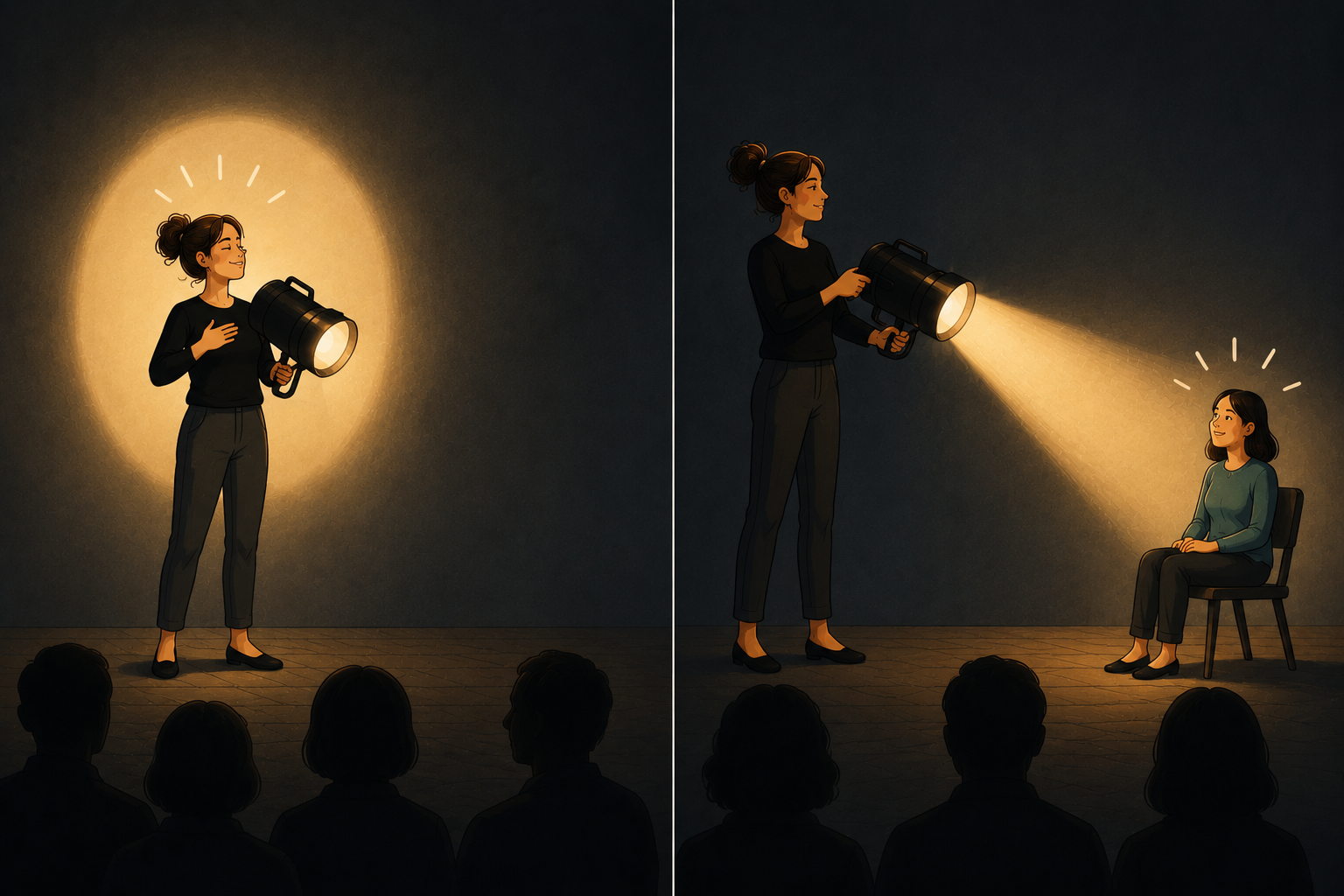
Because how we use “I” and “you” in writing is a lot like how we make eye contact or put down our phones when we are with someone in person.
As I’ve discussed before, the language we use when we are speaking to each other (especially in person, but also over the phone or on a video call) is different from the language we use when we are writing.
What I mean is that our spoken language comes along with body language. So, people can hear how we mean something (that’s tone–the face and sound and body that comes along with the words…which is why writing tends to sound mean..er). They can see how we mean it on our faces. They are getting the interpretation along with the words.
But writing is just the words.
So we have to do a lot more work to figure out how people feel about the words they are sending to us.
Also, when we use “I” and “you” in a spoken conversation, we both get to be “I” and “you” as we take turns talking.
But in writing, the writer is always “I” and the reader is always “you”, so every “I” sounds a little bit self-centered and ego-centric, where every “you” sounds like you are thinking about and connecting with the reader.
That’s why the “I”s and “you”s matter, because they are signals of attention. They are the eye contact of professional writing.
So, here’s the guideline: try to use more “you” in your writing at work. Think about where you can eliminate “I” and emphasize “you.” But don’t make it weird.
The only caveat with “you” is to avoid using it when you need to say something negative. It’s not “you didn’t do the dishes”; it’s “the dishes haven’t been done yet” (at work. I don’t know how you deal with the people you live with; that’s more of a therapist’s job).
And even better if you can make it positive: “The dishes are ready for you to clean them!” 🙂😋
Here's what this could look like in a real world example. This is an email from a business coach following up after a networking event:
***
Hi Kendall,
It was so nice to connect at the Weld County business mixer last month. I've been thinking about our conversation ever since.
I work with a lot of small business owners — mostly in service industries — and I have to say, what I hear from you reminds me of patterns I've seen before. Incredible craft, real passion, but the pricing and positioning side of things can hold people back from the income they deserve. I spent twelve years as an insurance auditor before moving into coaching, so I understand how numbers and risk intersect in ways that aren't always intuitive.
I'd love to offer you a complimentary 45-minute strategy session. No pressure, no pitch — just a chance to look at your business model with fresh eyes. I think you might be surprised at what we find.
Hope to hear from you! Antonia
***
Count the "I"s.
There are 11.
Now here's the same email, revised:
***
Hi Kendall,
Wonderful connecting with you at the Weld County business mixer last month! That comment you made about UFOs has had me thinking about aliens all week!
You also shared a little about how hard you find it to figure out the pricing and positioning of your business, which I totally get. You want to spend your time choosing amazing flooring options and helping your customers imagine what their homes could look like! That design instinct is your gift and your passion, which your customers can see and appreciate.
Well, numbers and risk are mine. As an insurance auditor and now coach, I get to help people like you build their dream businesses because numbers are my passion!
If you'd like some help on this, let's have a 45-minute strategy session to look at your business model together and see what we find!
Looking forward to learning more, Antonia
***
What you (hopefully) notice is that the content of the messages is the same. They are about the same stuff. But the feeling of the messages is totally different.
That’s because of how the versions use “I” and “you”.
In the first version, Antonia uses a lot of “I” which makes it read like she is focused on herself, her business, what she’s good at, and what she can tell Kendall.
I don’t want to work with that version of Antonia. Because it’s all about her.
But the second version? That one emphasizes “you” to show that Antonia was and is paying attention to Kendall. Antonia is making the same offer, but it reads like she understands Kendall and thinks she can help! And the offer uses “we” language that shows they’ll be working together to accomplish the same goal.
And here's the thing: AI writes emails like that first one. Every time. Because it learned from decades of professional writing where the writer's thoughts, credentials, and desires were the center of every message. It took all our bad habits and collected those into its training data and now spits that same not-so-good technique (it is grammatical solid, clear sentences, but totally untrained in the skills that work!) back at you every time you ask it to write an email.
AI didn't invent that habit of using “I” so often. It just perfected it and hands it right back to us whenever we invite it to.
The good news is that the Antonia of the revised draft isn't a naturally gifted communicator who just knows this stuff. She's a professional like you who has simply learned a few new strategies. And once you know them, you can use them (whether you're writing from scratch or fixing an AI draft) and your reader feels the difference.
When you meet a customer, you look them in the eye, shake their hand, and speak with confidence. Your writing can do that same work.